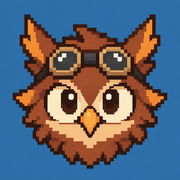
Owlboy Review: Is This Beautiful Pixel-Art Adventure Still Worth Playing?
Our Owlboy review explores its story, flying, companion combat, puzzles, flaws, and lasting appeal to help you decide if it is worth playing.
Owlboy turns the simple joy of flight into a heartfelt adventure filled with expressive pixel art, clever puzzles, and surprisingly vulnerable characters. This Owlboy review matters because the game’s gorgeous screenshots reveal only part of what makes it memorable—and none of the frustrations that may test your patience. In this Owlboy review, we examine its story, companion system, exploration, dungeons, and platform-specific concerns so you can decide whether Otus’s journey deserves a place in your library.
Owlboy Review at a Glance
Developed by D-Pad Studio, Owlboy is a story-focused action-adventure game presented in detailed pixel art. You play as Otus, a young owl who can fly freely but struggles with the expectations placed on him by his village and mentor.
That setup gives the game an unusual identity. Otus can soar through the world, yet he often feels powerless in conversations. His physical freedom contrasts with his insecurity, making his personal growth more compelling than a typical save-the-world premise.
| Review category | Assessment | What it means for players |
|---|---|---|
| Visual design | Excellent | Lavish pixel art and expressive animation remain striking |
| Story and characters | Very good | Emotional, character-driven storytelling with memorable relationships |
| Exploration | Good | Flying feels liberating, although navigation can become inconvenient |
| Combat | Good | Companion swapping creates variety but can feel awkward under pressure |
| Puzzle design | Very good | Dungeons make thoughtful use of movement and partner abilities |
| Replay value | Moderate | Collectibles add optional goals, but the campaign is mostly linear |
| Overall recommendation | Strong | Best for players who value atmosphere, narrative, and handcrafted design |
The experience generally takes around eight to twelve hours, depending on how thoroughly you search for collectibles and how quickly you solve environmental puzzles. Completionists should expect additional time, especially because the game does not provide the kind of detailed map or collectible tracker found in many modern adventures.
Players can find current platform details through the official Owlboy website, including storefront links and information from the developer.
Story, Characters, and Pixel-Art Presentation
Otus is a silent protagonist, but he is far from emotionless. His posture, facial expressions, and reactions communicate embarrassment, fear, determination, and affection without relying on spoken dialogue. The surrounding cast does the verbal work, while the animation ensures Otus remains the emotional center of each scene.
The story begins on a relatively personal scale before expanding into a larger conflict involving pirates, ancient mysteries, and the fate of the floating settlements. Its strongest moments are not necessarily the biggest confrontations. Instead, the game excels when it explores Otus’s friendships and his feeling that he has disappointed the people around him.
That emotional approach can occasionally become heavy-handed. Certain authority figures treat Otus harshly, and the narrative sometimes pushes its themes with little subtlety. Even so, the relationships develop enough warmth and complexity to keep the story from feeling relentlessly bleak.
A Pixel-Art World Built With Purpose
Calling Owlboy “pretty” undersells the level of craft involved. Backgrounds contain layered clouds, crumbling structures, vegetation, machinery, and tiny environmental animations. Characters move with personality, and dramatic scenes use lighting and framing to create a cinematic quality without abandoning the game’s retro-inspired look.
| Visual element | Why it stands out |
|---|---|
| Character animation | Communicates personality and emotion through small movements |
| Environmental detail | Makes villages, ruins, caves, and machinery feel distinct |
| Color direction | Separates peaceful skies from darker, more dangerous locations |
| Boss presentation | Uses scale and motion to make encounters feel dramatic |
| Background layering | Adds depth to a world constructed from two-dimensional artwork |
The soundtrack reinforces that presentation with sweeping orchestral themes, quieter character pieces, and energetic music during danger. Headphones are worthwhile because the music and environmental effects add substantially to the atmosphere.
This Owlboy review would be incomplete without emphasizing how well the audiovisual design has aged. Pixel art can vary dramatically in quality, but Owlboy’s careful animation and composition give it an enduring appeal rather than the appearance of a temporary retro trend.
Flying, Companions, and Combat Explained
Flight is Owlboy’s defining movement mechanic. Otus can lift off almost anywhere, hover in place, and move in every direction without managing a stamina meter. Open environments therefore feel wonderfully accessible: you can weave between islands, descend into hidden spaces, and inspect suspicious corners without repeatedly falling back to the ground.
That freedom changes the traditional platforming formula. The challenge rarely comes from making a precise jump. Instead, it comes from navigating hazards, carrying objects, avoiding enemy attacks, or positioning a companion correctly.
Tight spaces are less graceful. Otus can feel overly sensitive when a room demands precise movement, and limited-visibility sequences may slow the pace. Players using an analog stick may benefit from making smaller inputs rather than holding a direction at full tilt.
How the Companion System Works
Otus does not rely on a conventional weapon. He carries allies, each of whom supplies a different ranged ability. Geddy, the first major companion, uses a dependable blaster. Later partners introduce specialized attacks and tools that change how you approach enemies and environmental obstacles.
Otus can throw a companion toward a switch, place them on a platform, or teleport the selected partner back into his grasp. That last ability is supported by the game’s fiction, which helps the mechanic feel like part of the world rather than a purely convenient shortcut.
| Companion function | Best practical use | Common mistake |
|---|---|---|
| Standard ranged fire | Clearing ordinary enemies and distant targets | Firing without adjusting Otus’s position |
| Heavy short-range damage | Breaking through durable threats quickly | Moving too close before the attack is ready |
| Web-based utility | Controlling targets and interacting with specific objects | Forgetting that it can support puzzle-solving |
| Companion placement | Activating mechanisms or dividing tasks | Throwing a partner past the intended platform |
| Instant recall | Recovering quickly after placement | Cycling to the wrong companion during combat |
Switching allies adds welcome variety, although selecting the right one can become clumsy during hectic encounters. The combat is more enjoyable when treated as a positioning puzzle than as a fast twin-stick shooter.
Try these practical tactics:
- Clear weaker enemies before interacting with switches or movable objects.
- Recall a companion immediately if an attempted throw leaves them exposed.
- Create distance before changing partners during a busy fight.
- Look for environmental interactions when direct attacks seem ineffective.
- Reposition vertically as well as horizontally; flight gives you more escape routes than a conventional platformer.
Boss battles usually combine movement, pattern recognition, and companion abilities. They are visually impressive, though players seeking highly technical combat may find the mechanics lighter than the presentation suggests.
Dungeons, Puzzles, and Exploration
Owlboy is at its best inside its major dungeons. These areas combine combat, navigation, object manipulation, and companion abilities without allowing any one idea to dominate for too long. New mechanics are typically introduced in safe circumstances before appearing in more demanding rooms.
Most puzzles are readable once you identify which objects can be moved, damaged, carried, or affected by a companion. If you become stuck, the solution is often nearby rather than hidden behind an obscure sequence.
| If you are stuck… | Check this first | Why it helps |
|---|---|---|
| A door will not open | Nearby switches and movable weights | Some mechanisms require simultaneous activation |
| An enemy seems invulnerable | Its facing, armor, or surroundings | Positioning may matter more than raw damage |
| A platform looks unreachable | Objects Otus can carry or throw | Flight alone is not always the complete solution |
| Progress appears blocked | Each companion’s utility ability | Puzzle tools can have uses beyond combat |
| A room seems empty | Walls, ceilings, and background details | Important interactive elements can blend into the scenery |
The pacing is generally strong. Quiet traversal gives way to compact puzzle sequences, combat escalations, and larger set pieces. Checkpoints are frequent, limiting the amount of progress lost after a mistake.
Exploration outside the dungeons is enjoyable but less convenient. The central world has optional paths and collectible coins, yet the lack of a comprehensive map makes revisiting old locations harder than necessary. Areas are distinctive enough to learn over time, but remembering the precise entrance to a missed collectible can still become tedious.
Coins unlock rewards and upgrades as you reach collection milestones. They provide a reason to search behind scenery and revisit suspicious spaces, although the process is more satisfying during natural story progression than during a late-game cleanup run.
For an efficient first playthrough:
- Search side passages as soon as you encounter them.
- Collect visible coins before triggering major story events.
- Remember recognizable landmarks near inaccessible objects.
- Revisit earlier spaces after gaining a new companion ability.
- Avoid chasing full completion unless you genuinely enjoy environmental searching.
Performance, Difficulty, and Who Should Play It
Early community reports concerning the Nintendo Switch release described freezes, blank screens, and occasional progression or scripting problems. Frequent autosaves reportedly reduced the amount of lost progress, but interruptions still affected the launch experience.
Those reports reflect an older version and should not automatically be treated as the condition of the game today. Patches, storefront versions, and hardware environments can change performance over time. Before purchasing, check recent player experience posts and the current update history for your specific platform.
| Player preference | Likely fit | Reason |
|---|---|---|
| Story-rich indie adventures | Excellent | Character development drives the experience |
| Detailed pixel art | Excellent | Visual craftsmanship is one of its greatest strengths |
| Exploration and environmental puzzles | Very good | Flight and companion tools support creative scenarios |
| Demanding action combat | Fair | Combat is varied but not exceptionally deep |
| Open-world freedom | Limited | Progression is largely linear despite explorable spaces |
| Completionist collecting | Mixed | Optional coins are rewarding, but navigation lacks modern conveniences |
| Short, focused campaigns | Very good | The story reaches its conclusion without excessive padding |
Difficulty is generally approachable. Individual rooms and bosses may require several attempts, but Owlboy is not designed around punishing failure. Its frequent checkpoints make experimentation manageable, and most challenges test observation more than reflexes.
This Owlboy review recommends the game most strongly to players who enjoyed narrative-focused indie adventures, environmental puzzle-platformers, or expressive retro visuals. It may be less suitable if you want extensive build customization, nonlinear questing, or mechanically demanding combat.
The game is also a reasonable choice for younger or less experienced players, although some emotionally intense scenes and navigation challenges may require patience. There is no need to collect every coin to understand the story, making a straightforward playthrough the best option for anyone who dislikes completionist tasks.
Final Verdict: Is Owlboy Worth Playing?
Owlboy remains memorable because its artistic ambition serves a sincere character story. Flight provides an immediate sense of freedom, the companion system keeps puzzles and battles varied, and the dungeons consistently introduce thoughtful situations. Otus’s vulnerability gives the adventure an emotional identity that many technically deeper games never achieve.
Its flaws are noticeable. Companion selection can become awkward, precise movement is less enjoyable in cramped areas, and backtracking for collectibles suffers without a robust map. Historical performance complaints surrounding the early Switch version are also worth researching before choosing a platform, even though they do not necessarily describe current builds.
| Final score area | Rating |
|---|---|
| Art and animation | 9.5/10 |
| Story and characters | 8.5/10 |
| Exploration and puzzles | 8.5/10 |
| Combat and controls | 7.5/10 |
| Navigation and completion features | 6.5/10 |
| Overall | 8.5/10 |
The central recommendation of this Owlboy review is simple: play it for its world, characters, and handcrafted dungeons rather than for deep combat or open-ended exploration. Those strengths outweigh its rougher mechanics, particularly for anyone who appreciates compact adventures made with a clear artistic vision.
FAQ
Is Owlboy a platformer or an adventure game?
It combines action-adventure design, environmental puzzles, combat, and platforming concepts. Because Otus can fly freely, it does not revolve around jumping in the traditional sense. Its dungeons and companion abilities are closer to an exploration-focused puzzle adventure.
How long does Owlboy take to finish?
A typical story playthrough takes roughly eight to twelve hours. Searching for optional coins and rewards can extend that estimate, especially because returning to previously visited areas requires careful navigation.
Is Owlboy difficult?
Owlboy offers moderate difficulty. Some puzzles and bosses require observation and repeated attempts, but regular checkpoints keep failure from becoming overly punishing. Players can complete the story without finding every collectible.
What is the final recommendation from this Owlboy review?
This Owlboy review recommends it to players who enjoy emotional storytelling, intricate pixel art, atmospheric exploration, and creative dungeon puzzles. Combat-focused players may find it mechanically light, while completionists may be frustrated by the limited mapping tools.
Related Guides
Is Owlboy a Metroidvania? Uncovering the True Genre of D-Pad Studio’s Platformer
Wondering if Owlboy is a metroidvania? Dive into our comprehensive genre breakdown, gameplay design analysis, and player experiences of this indie classic.
Owlboy Difficulty and Gameplay Breakdown: Is the Acclaimed Indie Worth Playing?
An in-depth look at Owlboy difficulty, gameplay mechanics, and community reviews. Discover whether D-Pad Studio's platformer lives up to the hype.
Owlboy How Long to Beat: Game Length and Completion Guide
Wondering about Owlboy how long to beat? Discover main story runtimes, completionist stats, platform differences, and playstyle breakdowns.
Owlboy Metacritic Breakdown: Why This Indie Darling Divided Critics and Players
Explore the Owlboy Metacritic reception, comparing critic scores and player feedback for D-Pad Studio's high-bit adventure game.