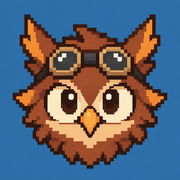
Owlboy Art Book Guide: What Fans Should Know Before Buying
Explore Owlboy art book options, official sources, collector checks, and ways to enjoy the game's detailed pixel art.
Why Owlboy’s Artwork Deserves a Closer Look
Few pixel-art games create a world as expressive, colorful, and emotionally grounded as Owlboy. That is why an Owlboy art book matters: it could offer a closer look at the characters, environments, animation, and creative decisions that are difficult to appreciate while playing. However, anyone searching for an Owlboy art book should first distinguish a confirmed official publication from collector listings, fan-made products, and other physical editions.
Developed over roughly a decade, Owlboy follows Otus, a mute young owl whose struggle to meet his community’s expectations becomes entangled with a sky-pirate attack. Its floating settlements, ancient ruins, expressive character portraits, and elaborate bosses give art enthusiasts plenty to study.
This guide explains what to verify before buying, where official artwork may appear, and how collectors can evaluate listings without overpaying for an incorrectly labeled item.
| Quick question | Practical answer |
|---|---|
| Is Owlboy visually distinctive? | Yes. Its detailed pixel art, animation, and floating-world designs are central to its identity. |
| Who created the game’s art? | D-Pad Studio identifies director and original creator Simon Stafsnes Andersen as the artist behind the game. |
| Should every “art book” listing be trusted? | No. Confirm the publisher, contents, ISBN or product code, and photos before ordering. |
| Are physical editions the same as art books? | Not necessarily. A boxed game may include bonus material without containing a full standalone book. |
| What is the safest research source? | Start with D-Pad Studio’s official channels and established retailers. |
Is There an Official Owlboy Art Book?
Availability requires careful wording. The supplied official reference confirms Owlboy physical releases, merchandise-related activity, and Simon Stafsnes Andersen’s role as the game’s artist. It does not, by itself, provide enough information to verify a currently available standalone art book, its publisher, page count, ISBN, price, or edition history.
That does not mean a book has never appeared as a limited bonus, regional extra, promotional item, or later product. It means buyers should avoid treating an unsupported marketplace title as proof of an official release.
Before purchasing an Owlboy art book, look for at least two independent indicators of authenticity.
| Verification detail | Strong evidence | Warning sign |
|---|---|---|
| Publisher | Named publisher with a product page | No publisher identified |
| Creator credit | Credits D-Pad Studio or the original artist | Vague wording such as “inspired artwork” |
| Product identifier | ISBN, SKU, or edition number | No searchable identifier |
| Interior contents | Clear page count and sample spreads | Only a cover image |
| Seller photos | Photos of the actual item and copyright page | Reused promotional mockups |
| Release context | Connected to an official edition or announcement | Seller makes unsupported rarity claims |
The best starting point is the official Owlboy website from D-Pad Studio. It identifies the principal creators, outlines the game’s features, and provides context for official products. If a listing conflicts with information from the studio or offers no traceable publishing details, contact the seller before paying.
Listings may also misuse the phrase “art book” for:
- A short booklet packaged with a collector’s edition
- A game manual containing a few illustrations
- A fan-produced zine or print collection
- A strategy guide with screenshots
- A digital gallery or downloadable image archive
- A standard physical game with reversible cover art
These items can still be enjoyable. They simply should not be priced or described as a comprehensive official concept-art volume unless the contents support that claim.
What an Owlboy Art Book Could Reveal
The appeal of an Owlboy art book goes beyond collecting another piece of game merchandise. Owlboy uses visual storytelling to communicate personality, scale, danger, and emotion, often without relying on lengthy dialogue.
Otus is especially interesting from an art and animation perspective. Because he does not speak, his posture, facial expressions, movement, and reactions must carry more narrative weight. A well-documented art collection could reveal how the team developed that visual vocabulary.
The supporting cast offers another layer. Otus can carry companions who act as gunners, and each ally has distinct abilities and a personal story. Their silhouettes and animation need to remain readable while Otus flies, carries them, navigates terrain, and fights enemies.
| Artistic area | What to examine | Why it matters |
|---|---|---|
| Character design | Silhouettes, costumes, expressions, color accents | Keeps the cast readable and emotionally distinct |
| Animation | Flight cycles, reactions, attacks, transitions | Gives personality to low-resolution sprites |
| Environment art | Clouds, settlements, ruins, machinery | Establishes the world’s history and vertical scale |
| Boss design | Size, weak points, motion, visual contrast | Communicates threat while supporting gameplay clarity |
| Color scripting | Palette changes between locations and scenes | Guides mood, pacing, and player attention |
| Interface artwork | Portraits, icons, menus, dialogue presentation | Unifies gameplay information with the world’s style |
The game’s development history makes this material particularly valuable. A project built across approximately ten years is likely to have undergone technical, stylistic, and narrative changes. Early sketches, abandoned character concepts, palette experiments, and revised environments could show how the final visual identity emerged.
An ideal book would not merely reproduce finished screenshots. It would connect preliminary work with the completed game and explain why specific ideas changed.
Features worth seeking
When comparing editions or collector listings, prioritize substance over packaging. A useful book would ideally include:
- Early Otus designs and animation studies
- Character sheets for allies and antagonists
- Environment concepts for settlements and ruins
- Sprite sheets shown at a readable scale
- Boss-development sketches
- Notes from Simon Stafsnes Andersen
- Comparisons between early and final assets
- Production commentary covering the long development cycle
- High-quality printing that preserves pixel edges and color accuracy
| Content type | Collector value | Educational value |
|---|---|---|
| Finished promotional art | High | Medium |
| Concept sketches | High | High |
| Annotated sprite sheets | High | Very high |
| Developer commentary | Very high | Very high |
| Unused designs | Very high | High |
| Uncaptioned screenshots | Low | Low |
How to Evaluate a Copy Before Buying
A convincing title is not enough. Whether you are examining a standalone Owlboy art book, a booklet from a physical edition, or a secondhand collector’s item, ask for precise evidence.
First, request a photograph of the copyright or credits page. This often reveals the publisher, publication year, rights holder, printing location, and ISBN. For bundled material, ask for a picture of every item included in the original package.
Next, compare the listing with archived retailer descriptions or official announcements when available. Differences are not automatically fraudulent—regional editions sometimes vary—but unexplained discrepancies should affect how much you are willing to pay.
Use this five-step buying check:
| Step | Action | Desired result |
|---|---|---|
| 1 | Identify the exact edition and region | A complete product name, platform, and release market |
| 2 | Verify the publisher or rights holder | A traceable company connected to the release |
| 3 | Confirm the format | Standalone hardcover, softcover, booklet, or digital gallery |
| 4 | Inspect condition with current photos | Visible cover, spine, corners, binding, and interior pages |
| 5 | Compare recent prices | A price based on comparable items rather than asking prices alone |
Condition matters because art books are handled differently from sealed games. Look for fading, moisture rippling, loose binding, creased corners, writing, odors, and missing pages. If the item came inside a collector’s box, determine whether the seller is offering the book alone or the complete package.
Community reports and player experience can help identify edition differences, but treat them as leads rather than final proof. A forum post may accurately describe one regional release while being irrelevant to another.
A simple value formula
Collectors can use a basic scoring method to avoid an emotional impulse purchase. Rate each category from 0 to 5, then total the results.
| Category | Maximum points | What earns a high score |
|---|---|---|
| Official provenance | 5 | Clear publisher and D-Pad Studio connection |
| Content depth | 5 | Concepts, notes, drafts, and substantial page count |
| Condition | 5 | Clean pages, sound binding, minimal wear |
| Completeness | 5 | All original inserts and packaging present |
| Price fairness | 5 | Comparable with verified recent sales |
A score of 21–25 suggests a strong collector candidate. A score of 15–20 may be worthwhile for a dedicated fan, depending on price. Below 15, consider waiting for a better-documented copy.
This is not an appraisal standard. It is a practical decision tool, especially when sellers attach a premium to the Owlboy art book name without proving what the item contains.
Alternatives for Studying Owlboy’s Pixel Art
If a verified book is unavailable or too expensive, there are still responsible ways to explore the game’s artwork.
Playing the game is the most direct option because animation, lighting, scale, and color transitions are best understood in motion. Pause where the platform allows, revisit areas, and study how foreground objects separate from interactive spaces.
The official site also provides approved character and promotional imagery alongside information about the game and its creators. Physical editions may offer additional packaging art, although buyers should check the exact contents of each version.
| Alternative | Best for | Main limitation |
|---|---|---|
| Playing the game | Animation, environments, visual storytelling | Assets cannot always be isolated |
| Official website | Creator credits and approved promotional art | Not a comprehensive archive |
| Physical editions | Packaging and possible printed extras | Contents vary by platform or region |
| Developer interviews | Production history and design context | Visual examples may be limited |
| Official trailers | Motion, effects, and scene composition | Edited footage moves quickly |
| Fan discussions | Discovering leads and edition differences | Community reports require verification |
Artists studying Owlboy can create a personal observation log without redistributing copyrighted assets. Record the location, palette, silhouette choices, animation timing, and emotional purpose of a scene. Then apply those principles to an original design instead of copying a sprite.
For example, study how a character remains recognizable against bright clouds and dark ruins. Ask which colors define the silhouette, how many frames make an action readable, and how environmental layers suggest depth. These lessons are useful even without owning an Owlboy art book.
Building a Thoughtful Owlboy Collection
A focused collection is often more satisfying than buying every listing containing the game’s name. Choose a theme, establish a budget, and document provenance from the start.
Possible themes include:
- The visual development of Otus
- Physical releases across different platforms
- Music and visual presentation
- Character-focused prints and merchandise
- D-Pad Studio promotional materials
- Pixel-art production and animation references
Keep receipts, seller messages, product identifiers, and photographs together. If an item is limited or signed, preserve the original documentation. Store printed material upright in a stable, dry environment away from direct sunlight.
| Collection goal | Best first purchase | What to avoid |
|---|---|---|
| Study the artwork | A documented book or substantial booklet | Listings without interior photos |
| Own an official keepsake | Verified physical edition or licensed item | Unlicensed reproductions sold as official |
| Preserve release history | Complete regional edition | Mixed components assembled by a reseller |
| Display the visuals | Licensed print or well-preserved packaging | Sun-faded or moisture-damaged paper |
| Find a rare item | Provenanced copy with identifiers | Paying solely for the word “rare” |
Set a maximum price before negotiating. Base it on completed sales when possible, not just current listings. Asking prices show what sellers hope to receive; completed transactions better reflect what buyers have actually paid.
Most importantly, buy the object for what it verifiably is. A modest official booklet can be more meaningful than an expensive, poorly documented product advertised as the definitive Owlboy art book.
Frequently Asked Questions
Is there an official Owlboy art book?
The supplied official source confirms the game’s creator, art credit, physical releases, and broader merchandise activity, but it does not verify a currently available standalone book with publishing specifications. Check D-Pad Studio’s official channels and request publisher details before purchasing any listing.
Who created the art for Owlboy?
D-Pad Studio identifies Simon Stafsnes Andersen as the game’s director, original creator, and artist. Other team members contributed programming, story, level design, promotion, music, sound, and merchandising work.
What should I check in an Owlboy art book listing?
Verify the publisher, rights holder, publication date, ISBN or product code, page count, format, and actual interior photographs. Also determine whether it is a standalone publication, a collector’s-edition booklet, or a fan-made product.
What is the best alternative if I cannot find the book?
Play the game and use official promotional material to study its character animation, environments, palettes, and visual storytelling. Developer interviews and well-documented physical editions can add context, while community reports can help locate leads that should then be independently verified.
Related Guides
Owlboy Pixel Art: How Its Color, Animation, and Detail Create a Living World
Explore how Owlboy pixel art uses color, animation, silhouettes, and layered environments—and learn techniques for your own pixel scenes.
Owlboy Soundtrack Guide: Why Jonathan Geer’s Soaring Score Still Resonates
Explore the Owlboy soundtrack, its orchestral style, standout themes, musicians, formats, and lasting appeal among players.
Owlboy Sprites: A Practical Guide to Pixel Art, Animation, and Asset Study
Explore Owlboy sprites, animation techniques, sprite resources, and practical ways to study the game's detailed pixel art.
Owlboy Trailer Guide: What the Nintendo Switch Preview Reveals
Explore the Owlboy trailer, its Switch release details, gameplay highlights, visual style, and what to watch for before playing.